Pages

Tuesday, November 27, 2012

Waste Not Want Not

Lucky number 10, that's right this is blog assignment #10. This one was pretty interesting because it was interactive and eye-opening. This assignment was about reducing my waste and the first part directed me to keep track of the total amount of waste I produced in 2 days. So how much waste did I produce in those first two days, well not much but that's kinda normal for me. I am a vegetarian and I cut my processed food consumption down a lot, so as a result my waste production is generally small. As you can see below, this was my waste for the two days. Not pictured would be some apple cores, orange peels, and kiwi peel. I use a lot of reusable containers, and try to purchase things that don't come in a lot of packaging already. There's a mix of recyclables like the milk carton, the naked bottle, and a few others things that I do in fact recycle. 

Now onto part two which had me look up waste reduction strategies. I found this website http://www.clearwater-fl.com/gov/depts/solid_waste/docs_pub/wrtips.asp which had a lot of useful tips (some of which  I already do). So, after reading this we were instructed to apply some of these strategies and keep track again for two days. At the end we were once again suppose to find out how much waste was reduced after those two days when we were conscious of it.  So, I stayed away from packaging by purchasing fresh products, I drank only from my reusable bottles, and when I made my meals I only used small amounts and put whatever I didn't need in reusable containers. I also refrained from any kind of takeout or any type of food that came in multiple packages As you can see from the picture I produced was less waste the last two days. The only things that were in it were apple cores, peels from fruit like oranges and kiwi, and 1 plastic bag. Needless to say there wasn't a lot to throw away during those two days. 
The strategies I really used were reducing the amount of packaging I buy, using reusable things, buying products that need to packaging, recycling things, avoid disposable things and refrain from paper plates and paper towels. These are all strategies  I will continue to sue in order to keep my waste production low, and hopefully I can get others in my house to follow. So far I have gotten them to recycle; some progress is better than no progress. 


Friday, November 23, 2012

Little changes do more than you think!

source:http://24.media.tumblr.com/tumblr_m721updKHx1r68ahwo1_500.jpg
source:http://25.media.tumblr.com/tumblr_m00v37Hs2H1rp3o35o1_500.jpg
source:http://thegreenregister.com/wp-content/uploads/2012/05/GoingGreen_Infographic_960_opt.jpg


Tuesday, November 20, 2012

Climate Change: It's BIG, it's REAL, and it's HAPPENING NOW!

Hello there!
We are now on blog assignment #9 and this one is something that should definitely interest you, at least it did me. So, what is this interesting topic? Well, it is about climate change and how even though there is unanimous scientific agreement about it confusion and doubt are persistent. Now that we know what the blog is about we can get into the details, more specifically what I am supposed to do. Well I was supplied with various websites and instructed to use one or more to answer questions that were presented to me.  I went with two websites, and for convenience here they are: http://www.epa.gov/climatechange/facts.html & http://www.c2es.org/

Now that we know the websites that I chose, I will move onto the questions.
1)  According to evidence, is the climate changing right now?
There is undoubtedly overwhelming evidence that climate is changing as you read this blog. That is, all over the world temperatures are warmer than normal and as a result ice caps are melting and sea levels rising. The epa.gov website states that “the global average temperature increased by more than 1.4°F over the last century” and the warmest decade on record is 2000-2010. This is evidence that you yourself can see/feel when you walk outside.  

2) What does evidence say about humans’ roles in the changing climate?
Not only is there evidence that supports the claims of climate change, but there is also evidence that humans have a major role in why this change in climate is occurring. “The Earth does go through natural cycles of warming and cooling, caused by factors such as changes in the sun or volcanic activity. This has been closely examined, and the warming we have seen in the past 50 years cannot be explained by natural factors alone” (epa.gov). So, if natural cycles aren’t to blame than humans are the only other factor. Their roles that contribute to the warming include the industrial revolution and what came with it. Since we’ve started building factors, cars, etc. we have had an increase in greenhouse gas emissions, more specifically carbon dioxide.  As you can see by the chart below, all the things contributing to the greenhouse gas emissions are human related.

source:http://www.c2es.org/docUploads/sectors-2010.png


3)How is climate change likely to affect our society and our world?
Climate change is likely to change everything about our society and our world. If things don’t change and we continue to contribute to increase in warming as oppose to reversing it, sea levels will rise and a lot of coastal places will be under water, and there will be droughts which will result in less/higher priced food. Now, there is obviously a lot more that can result, but those are two big consequences right there.

That was just the first part of the assignment, onto the next which points out that the aforementioned doubt/denial despite overwhelming evidence is almost only entirely existent within the United States. Now I know what you are wondering, why is it that everyone around the world can accept that climate change is real except the United States? Well the answer is simple, it’s due to the fact that this skepticism basically centers around the idea that global warming/climate change “is not a crisis”, and that “the benefits of a moderate warming are likely to outweigh the costs” (heartland.org). I think that this idea still exists because doing something to stop climate change/make a difference would mean that taxes would be raised, heavier regulations on corporations, etc. These are things that people hear and run away from because they don’t want to pay more money. And, let’s face it big corporations run this country and as long as they pull the strings things won’t change for the better because there’s no way they want to face stricter regulations and higher taxes. Anything that possibly takes from their pockets is automatically considered back so they will find claims to back their side up.  The website that examines the skeptic’s side is below.
(http://heartland.org/ideas/global-warming-not-crisis)

source:https://blogger.googleusercontent.com/img/b/R29vZ2xl/AVvXsEgVZmlb9K8C9QmFnA38Nuc1PZtpBhHYUfAic-XrR3tU4_gCt9crKsduPnePM3ZSZp3PdphyphenhyphenMjHXn3CLYia6Tglol3YrDDkaSPyNQvBfHZKvg4pskPfSNBH-Y3ftpYCjQ7LvIEP9-sZorC0/s320/Global+Warming+Politics.JPG


Lastly, for the third part I was instructed to describe what I think the world will be like in 50 years if we continue with our current path and do nothing to slow the rise of the CO2 levels in the atmosphere. So, how do I think the world will be? Well, I think it will be drastically different. I believe that cancer rates will continue to rise, poverty will rise, there will be famine due to drought, we will have a drastic loss in species diversity, clean/drinkable water will be hard to come by, etc. I see nothing positive unless we change things, so be the change and spread the word. 


Source:https://blogger.googleusercontent.com/img/b/R29vZ2xl/AVvXsEiE92G2_6Vi2PIFsdEKSsOYpOlf314TcdM6mBp_jrKZSZnDfTR1uHnLaJ-bS6PCWfW0tOTvYECI0DF4cuYRzgU9hZ93RibywRmYBfjpRhe0yIfU1CL4nL3uBtd595fYJB-F0znWSKltwdI/s400/combating-global-warming-map.jpg

Tuesday, November 13, 2012

Environmental Chemicals in Human Bodies


Believe it or not we are now on blog assignment #8 for my Environmental Science class. This assignment had us read an article and reflect on it. The article in question is “Regulating toxic chemicals: Do we know enough about chemical risks?” and if you would like to read it too here is the link: (http://faculty.rcc.edu/huff/FALL%202012/enviromental%20sci/blog%20assignemnts/RegulatingToxicChemicals.pdf)
After reading the article we were to either focus on one issue raised by it or just do an overall reflection of the whole article. Personally I went for the single issue, and the one that really caught my eye was the part that highlighted the fact that all human bodies today carry trace amount of chemicals. Now, there’s really no way of getting away from these chemicals because they enter our bodies in numerous ways starting from when we are a fetus into adulthood. Exposure can happen just about anywhere, as we inhale pollutants that are in the air, ingest chemical additives and residue from pesticides when we consume food and drink. Now, the issue with chemicals invading our bodies is that they can cause cancer, birth defects, development problems and other serious health impacts that are unknown at the time. This development is very troubling because it seems as though there is nothing we can do to get away from these chemicals entering our body, we can just try to reduce the amount that enters.  In a related article I read (linked below) I found out that “environmental and lifestyle factors are key determinants of human disease—accounting for perhaps 75% of most cancers”(ncbi). This is a scary number and I think that while lifestyle factors are included, environmental factors still have a huge impact. This brings me to the last point which is whether or not the precautionary principle is something we should be following when it comes to chemical regulations. I believe as a country we should, because it is better to be cautious then to wait and see how these chemicals will affect us in the long run. The dangers are real, and a lot of the time we won’t know any adverse effects until it is too late. We are witnessing this today with studies that have found out that chemicals used 20-30 years ago are now dangerous. Don’t be a guinea pig anymore, demand stricter regulations that are more serious about human health.

Related articles :) 
http://www.ncbi.nlm.nih.gov/pmc/articles/PMC344268/

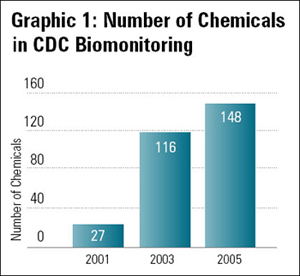
This is a graph that illustrates the increase of chemicals that we have discovered/monitored in the human body, known as Biomonitoring. As you can see it is a very drastic increase. To read more about this follow the source below. 
Source: http://www.mackinac.org/9247


Since we just talked about this....

I found this article really interesting and thought I'd share it :)
http://www.nbcnews.com/technology/futureoftech/first-algae-derived-fuel-hits-pumps-1C7048163

Tuesday, November 6, 2012

Minimizing Energy Use is Actually Easy!


If you are keeping up with my blog you will see that I am now on to assignment #7. What does this assignment have me doing you ask? Well, I will tell you it was something that didn't seem easy at first glance. Assignment #7 had me try and minimize my energy use as much as possible for a 24-hour period. The rules I had to follow were:

- Unplug!  No use of technological devices during the 24-hour period.  This includes cell phones, Mp3 players, computers, televisions, etc.
- Unplug all of your electronic devices that are not currently in use (toaster, blender, cell phone charger, blow dryer, etc.).  They are all drawing electricity even if they are turned off.
- Drive as little as possible during this 24-hour period.  (I realize that you have to meet your daily obligations…but do you really need to drive to the store that is on the other side of the same shopping center?  Could you walk to pick up your kids from school? 
Can you carpool or use public transportation?  Can you ride your bike?)
- Use overhead lighting and lamps only when necessary – when you leave the room, turn them off!
- Minimize your use of hot water.  Take a short shower and use cold water to wash your clothes.
- Hang your clothes on a rack or clothesline to dry.
- Think about your indoor temperature control – can you open windows or use a blanket rather than using the a/c or heater?

Now, after reading these rules/guidelines you can see how the assignment can seem difficult at first glance. Come to find out it was a lot easier than I had imagine, and more so I enjoyed the peacefulness that accompanied this assignment.  The first question for me to answer has me telling you what I was able to accomplish as far as this list goes. I live with my parents and brother, so getting them to join in was not going to happen, but I was able to go about unplugging things that were not in use. Now as far as my room goes, and my own personal usage, I only used a small lamp for about 3 hours while I read a book (keep in mind I do use energy efficient bulbs). I also had to keep my snake’s heating pad plugged in so that he didn’t freeze. As far as everything else goes I can proudly, and honestly say that I did refrain from using any electronics. I kept them off, and unplugged everything from my room that I did not use. The lamp was also only plugged in for those few hours. I didn't use any hot water, and since it was a decent day I didn't need to use fans or a heater. I also stayed in and saved gas.

The second question has me reflecting on how I felt about these changes. This question is easy because I actually felt really good about them. I feel that a majority of the things we use that consume a lot of energy are luxuries that we could definitely reduce, or even do without. I mean how many homes actually need a TV in every room, more so one that is plugged in 24/7? The same goes with computers, and many other electronic devices. I think this project has opened my eyes to the fact that a lot of people over do things. Growing up I remember only having one TV in my household, no computers, and one video game console. More so, I remember hardly using them because we were always doing more productive things.  Maybe this is why I found giving up these things that I now have so easy. I actually very much enjoyed just reading a book and not having my phone continuously go off. This brings me to the third question which asks which I could live without, this list includes: TV, cell phone, microwave, toaster, blender, other electronic kitchen devices, blow dryer, curling iron, Mp3 player,  clothes dryer( I currently hang dry my clothes), video games, and I am sure a lot of other things. Now, I do need a laptop only because of school work and to keep in touch with people, but this is the thing that I could reduce my use of(not that I use it that much).Another thing that I would prefer not to do with out is my record player, but it is another thing that I only use on occasions and wouldn't mind reducing its use.  I would also replace driving trips that are reasonable with riding a bike, or bus.  Now, I definitely need a fridge and shower but I could reduce my shower time to minimize my hot water use.

Finally, I was to look around my house and figure out what I could do to increase energy efficiency in my household without giving up convenience or technology. There is definitely a lot, but just a few things include unplugging anything and everything that is not being used, to shut off lights, TVs, computers, etc. when leaving a room, grab a blanket instead of using a heater/using fans instead of central air, switch things that aren’t energy efficient to energy efficient, and lastly get everyone in the household to join in on reducing energy use. There’s obviously a lot more that can be done but those are just a couple things. Given time and money I feel that a lot of these things can be accomplished, and maybe even more like maybe using solar panels for some of our energy.