Pages

Tuesday, November 27, 2012

Waste Not Want Not

Lucky number 10, that's right this is blog assignment #10. This one was pretty interesting because it was interactive and eye-opening. This assignment was about reducing my waste and the first part directed me to keep track of the total amount of waste I produced in 2 days. So how much waste did I produce in those first two days, well not much but that's kinda normal for me. I am a vegetarian and I cut my processed food consumption down a lot, so as a result my waste production is generally small. As you can see below, this was my waste for the two days. Not pictured would be some apple cores, orange peels, and kiwi peel. I use a lot of reusable containers, and try to purchase things that don't come in a lot of packaging already. There's a mix of recyclables like the milk carton, the naked bottle, and a few others things that I do in fact recycle. 

Now onto part two which had me look up waste reduction strategies. I found this website http://www.clearwater-fl.com/gov/depts/solid_waste/docs_pub/wrtips.asp which had a lot of useful tips (some of which  I already do). So, after reading this we were instructed to apply some of these strategies and keep track again for two days. At the end we were once again suppose to find out how much waste was reduced after those two days when we were conscious of it.  So, I stayed away from packaging by purchasing fresh products, I drank only from my reusable bottles, and when I made my meals I only used small amounts and put whatever I didn't need in reusable containers. I also refrained from any kind of takeout or any type of food that came in multiple packages As you can see from the picture I produced was less waste the last two days. The only things that were in it were apple cores, peels from fruit like oranges and kiwi, and 1 plastic bag. Needless to say there wasn't a lot to throw away during those two days. 
The strategies I really used were reducing the amount of packaging I buy, using reusable things, buying products that need to packaging, recycling things, avoid disposable things and refrain from paper plates and paper towels. These are all strategies  I will continue to sue in order to keep my waste production low, and hopefully I can get others in my house to follow. So far I have gotten them to recycle; some progress is better than no progress. 


Friday, November 23, 2012

Little changes do more than you think!

source:http://24.media.tumblr.com/tumblr_m721updKHx1r68ahwo1_500.jpg
source:http://25.media.tumblr.com/tumblr_m00v37Hs2H1rp3o35o1_500.jpg
source:http://thegreenregister.com/wp-content/uploads/2012/05/GoingGreen_Infographic_960_opt.jpg


Tuesday, November 20, 2012

Climate Change: It's BIG, it's REAL, and it's HAPPENING NOW!

Hello there!
We are now on blog assignment #9 and this one is something that should definitely interest you, at least it did me. So, what is this interesting topic? Well, it is about climate change and how even though there is unanimous scientific agreement about it confusion and doubt are persistent. Now that we know what the blog is about we can get into the details, more specifically what I am supposed to do. Well I was supplied with various websites and instructed to use one or more to answer questions that were presented to me.  I went with two websites, and for convenience here they are: http://www.epa.gov/climatechange/facts.html & http://www.c2es.org/

Now that we know the websites that I chose, I will move onto the questions.
1)  According to evidence, is the climate changing right now?
There is undoubtedly overwhelming evidence that climate is changing as you read this blog. That is, all over the world temperatures are warmer than normal and as a result ice caps are melting and sea levels rising. The epa.gov website states that “the global average temperature increased by more than 1.4°F over the last century” and the warmest decade on record is 2000-2010. This is evidence that you yourself can see/feel when you walk outside.  

2) What does evidence say about humans’ roles in the changing climate?
Not only is there evidence that supports the claims of climate change, but there is also evidence that humans have a major role in why this change in climate is occurring. “The Earth does go through natural cycles of warming and cooling, caused by factors such as changes in the sun or volcanic activity. This has been closely examined, and the warming we have seen in the past 50 years cannot be explained by natural factors alone” (epa.gov). So, if natural cycles aren’t to blame than humans are the only other factor. Their roles that contribute to the warming include the industrial revolution and what came with it. Since we’ve started building factors, cars, etc. we have had an increase in greenhouse gas emissions, more specifically carbon dioxide.  As you can see by the chart below, all the things contributing to the greenhouse gas emissions are human related.

source:http://www.c2es.org/docUploads/sectors-2010.png


3)How is climate change likely to affect our society and our world?
Climate change is likely to change everything about our society and our world. If things don’t change and we continue to contribute to increase in warming as oppose to reversing it, sea levels will rise and a lot of coastal places will be under water, and there will be droughts which will result in less/higher priced food. Now, there is obviously a lot more that can result, but those are two big consequences right there.

That was just the first part of the assignment, onto the next which points out that the aforementioned doubt/denial despite overwhelming evidence is almost only entirely existent within the United States. Now I know what you are wondering, why is it that everyone around the world can accept that climate change is real except the United States? Well the answer is simple, it’s due to the fact that this skepticism basically centers around the idea that global warming/climate change “is not a crisis”, and that “the benefits of a moderate warming are likely to outweigh the costs” (heartland.org). I think that this idea still exists because doing something to stop climate change/make a difference would mean that taxes would be raised, heavier regulations on corporations, etc. These are things that people hear and run away from because they don’t want to pay more money. And, let’s face it big corporations run this country and as long as they pull the strings things won’t change for the better because there’s no way they want to face stricter regulations and higher taxes. Anything that possibly takes from their pockets is automatically considered back so they will find claims to back their side up.  The website that examines the skeptic’s side is below.
(http://heartland.org/ideas/global-warming-not-crisis)

source:https://blogger.googleusercontent.com/img/b/R29vZ2xl/AVvXsEgVZmlb9K8C9QmFnA38Nuc1PZtpBhHYUfAic-XrR3tU4_gCt9crKsduPnePM3ZSZp3PdphyphenhyphenMjHXn3CLYia6Tglol3YrDDkaSPyNQvBfHZKvg4pskPfSNBH-Y3ftpYCjQ7LvIEP9-sZorC0/s320/Global+Warming+Politics.JPG


Lastly, for the third part I was instructed to describe what I think the world will be like in 50 years if we continue with our current path and do nothing to slow the rise of the CO2 levels in the atmosphere. So, how do I think the world will be? Well, I think it will be drastically different. I believe that cancer rates will continue to rise, poverty will rise, there will be famine due to drought, we will have a drastic loss in species diversity, clean/drinkable water will be hard to come by, etc. I see nothing positive unless we change things, so be the change and spread the word. 


Source:https://blogger.googleusercontent.com/img/b/R29vZ2xl/AVvXsEiE92G2_6Vi2PIFsdEKSsOYpOlf314TcdM6mBp_jrKZSZnDfTR1uHnLaJ-bS6PCWfW0tOTvYECI0DF4cuYRzgU9hZ93RibywRmYBfjpRhe0yIfU1CL4nL3uBtd595fYJB-F0znWSKltwdI/s400/combating-global-warming-map.jpg

Tuesday, November 13, 2012

Environmental Chemicals in Human Bodies


Believe it or not we are now on blog assignment #8 for my Environmental Science class. This assignment had us read an article and reflect on it. The article in question is “Regulating toxic chemicals: Do we know enough about chemical risks?” and if you would like to read it too here is the link: (http://faculty.rcc.edu/huff/FALL%202012/enviromental%20sci/blog%20assignemnts/RegulatingToxicChemicals.pdf)
After reading the article we were to either focus on one issue raised by it or just do an overall reflection of the whole article. Personally I went for the single issue, and the one that really caught my eye was the part that highlighted the fact that all human bodies today carry trace amount of chemicals. Now, there’s really no way of getting away from these chemicals because they enter our bodies in numerous ways starting from when we are a fetus into adulthood. Exposure can happen just about anywhere, as we inhale pollutants that are in the air, ingest chemical additives and residue from pesticides when we consume food and drink. Now, the issue with chemicals invading our bodies is that they can cause cancer, birth defects, development problems and other serious health impacts that are unknown at the time. This development is very troubling because it seems as though there is nothing we can do to get away from these chemicals entering our body, we can just try to reduce the amount that enters.  In a related article I read (linked below) I found out that “environmental and lifestyle factors are key determinants of human disease—accounting for perhaps 75% of most cancers”(ncbi). This is a scary number and I think that while lifestyle factors are included, environmental factors still have a huge impact. This brings me to the last point which is whether or not the precautionary principle is something we should be following when it comes to chemical regulations. I believe as a country we should, because it is better to be cautious then to wait and see how these chemicals will affect us in the long run. The dangers are real, and a lot of the time we won’t know any adverse effects until it is too late. We are witnessing this today with studies that have found out that chemicals used 20-30 years ago are now dangerous. Don’t be a guinea pig anymore, demand stricter regulations that are more serious about human health.

Related articles :) 
http://www.ncbi.nlm.nih.gov/pmc/articles/PMC344268/

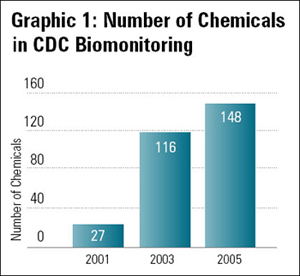
This is a graph that illustrates the increase of chemicals that we have discovered/monitored in the human body, known as Biomonitoring. As you can see it is a very drastic increase. To read more about this follow the source below. 
Source: http://www.mackinac.org/9247


Since we just talked about this....

I found this article really interesting and thought I'd share it :)
http://www.nbcnews.com/technology/futureoftech/first-algae-derived-fuel-hits-pumps-1C7048163

Tuesday, November 6, 2012

Minimizing Energy Use is Actually Easy!


If you are keeping up with my blog you will see that I am now on to assignment #7. What does this assignment have me doing you ask? Well, I will tell you it was something that didn't seem easy at first glance. Assignment #7 had me try and minimize my energy use as much as possible for a 24-hour period. The rules I had to follow were:

- Unplug!  No use of technological devices during the 24-hour period.  This includes cell phones, Mp3 players, computers, televisions, etc.
- Unplug all of your electronic devices that are not currently in use (toaster, blender, cell phone charger, blow dryer, etc.).  They are all drawing electricity even if they are turned off.
- Drive as little as possible during this 24-hour period.  (I realize that you have to meet your daily obligations…but do you really need to drive to the store that is on the other side of the same shopping center?  Could you walk to pick up your kids from school? 
Can you carpool or use public transportation?  Can you ride your bike?)
- Use overhead lighting and lamps only when necessary – when you leave the room, turn them off!
- Minimize your use of hot water.  Take a short shower and use cold water to wash your clothes.
- Hang your clothes on a rack or clothesline to dry.
- Think about your indoor temperature control – can you open windows or use a blanket rather than using the a/c or heater?

Now, after reading these rules/guidelines you can see how the assignment can seem difficult at first glance. Come to find out it was a lot easier than I had imagine, and more so I enjoyed the peacefulness that accompanied this assignment.  The first question for me to answer has me telling you what I was able to accomplish as far as this list goes. I live with my parents and brother, so getting them to join in was not going to happen, but I was able to go about unplugging things that were not in use. Now as far as my room goes, and my own personal usage, I only used a small lamp for about 3 hours while I read a book (keep in mind I do use energy efficient bulbs). I also had to keep my snake’s heating pad plugged in so that he didn’t freeze. As far as everything else goes I can proudly, and honestly say that I did refrain from using any electronics. I kept them off, and unplugged everything from my room that I did not use. The lamp was also only plugged in for those few hours. I didn't use any hot water, and since it was a decent day I didn't need to use fans or a heater. I also stayed in and saved gas.

The second question has me reflecting on how I felt about these changes. This question is easy because I actually felt really good about them. I feel that a majority of the things we use that consume a lot of energy are luxuries that we could definitely reduce, or even do without. I mean how many homes actually need a TV in every room, more so one that is plugged in 24/7? The same goes with computers, and many other electronic devices. I think this project has opened my eyes to the fact that a lot of people over do things. Growing up I remember only having one TV in my household, no computers, and one video game console. More so, I remember hardly using them because we were always doing more productive things.  Maybe this is why I found giving up these things that I now have so easy. I actually very much enjoyed just reading a book and not having my phone continuously go off. This brings me to the third question which asks which I could live without, this list includes: TV, cell phone, microwave, toaster, blender, other electronic kitchen devices, blow dryer, curling iron, Mp3 player,  clothes dryer( I currently hang dry my clothes), video games, and I am sure a lot of other things. Now, I do need a laptop only because of school work and to keep in touch with people, but this is the thing that I could reduce my use of(not that I use it that much).Another thing that I would prefer not to do with out is my record player, but it is another thing that I only use on occasions and wouldn't mind reducing its use.  I would also replace driving trips that are reasonable with riding a bike, or bus.  Now, I definitely need a fridge and shower but I could reduce my shower time to minimize my hot water use.

Finally, I was to look around my house and figure out what I could do to increase energy efficiency in my household without giving up convenience or technology. There is definitely a lot, but just a few things include unplugging anything and everything that is not being used, to shut off lights, TVs, computers, etc. when leaving a room, grab a blanket instead of using a heater/using fans instead of central air, switch things that aren’t energy efficient to energy efficient, and lastly get everyone in the household to join in on reducing energy use. There’s obviously a lot more that can be done but those are just a couple things. Given time and money I feel that a lot of these things can be accomplished, and maybe even more like maybe using solar panels for some of our energy.

Tuesday, October 23, 2012

Tap vs. Bottled, which is the better overall choice?


Hello everyone!
So, for my 6th blog assignment I was instructed to learn the pros and cons of tap water vs. bottled water.
The first part of this assignment involved me finding out where exactly my home’s tap water came from. So, what did it I find out? Well, after some research I came across that Riverside’s water is received from Riverside Public Utilities. It is essentially snow/rain water the starts out on our local mountains, and then flows downhill into underground aquifers.   From there the water is then filtered through a purification process that occurs naturally otherwise known as percolation. This is done yearly, usually after a storm.  Now, these water sources are located all throughout Riverside, and even San Bernardino. Source:http://www.riversideca.gov/utilities/pdf/wqar/2012/wqar-2012.pdf

The second part of the assignment had me researching tap (drinking) water standards and comparing/contrasting the results with bottled water standards. So, I found out the drinking water standards in California are some of the highest out of all the 50 states. There is actually an act that was passed by Congress in 1974 to ensure that all drinking water is free of harmful chemicals. Known as The Safe Drinking Water Act, it requires that each state carry our tests that are rigorous in order to ensure that the water received from each provide is safe to drink. Tests are carried out on a daily bases, and they make sure they meet, if not surpass all standards set by the act. The agencies that are in charge of regulating drinking water are the California Department of Public Health (CDPH) and the Environmental Protection Agency (EPA).

 As for bottled water, much to what we have been taught to believe, it is not safer than tap water. It is controlled by the Food and Drug Administration (FDA), and doesn’t undergo nearly as much regulation as tap water does. More so, the FDA’s record for protecting out health is not the best. That alone is evidence to whether or not bottle water is really safe. The FDA only inspects the plants where bottled water comes from every couple of years. This is in comparison to the daily tests that our tap water undergoes.  Even scarier is that independent testing of 10 popular brands of bottled water found out that they contained around 38 pollutants and an average of around 8 contaminates in each individual brand.

Lastly, I was instructed to assess the drawbacks of bottled water. We hear all the time how it is safer and more convenient than tap water, but as I just pointed out it definitely isn't safer. So, this leads me to convenience. Certainly the cost makes it less convenient than tap water.  In 2009 Americans on average spent 10.6 billion dollars on bottled water, and even more so they were paying 1,000 times more than what tap water costs.  To me, it seems less convenient to spend an average of 2 dollars on one small bottle of water that is only going to last a short time. Instead, you could opt for a reusable bottle and just fill it with tap water. This would not only save money it would reduce the amount of plastic being polluted. That is, because instead of being recycled about 75% of the water bottles that are purchased end up in places such as landfills, lakes and the oceans. It’s not just he plastic bottles that are bad for the environment, it’s also the fossil fuels that are used just to produce and transport the bottled water. In the United States alone the energy used is equal to around 32-54 million barrels of oil.

Overall, I say tap water is a much better choice than bottled water. You are not only saving money, but also helping out the environment. If you are still worried about the safety of your tap water, you can easily find out detailed information by searching for your town’s annual drinking water report. It is as easy as typing in the name of the town followed by “annual drinking water report”. If you are still uneasy you can opt for a Brita filter system, or something similar. This will still help in reducing the amount of plastic bottles polluted in our environment.
If you are interested, watch this short video about the story of bottled water J

Thursday, October 11, 2012

Simply Put, Don't Litter.

Source:https://sphotos-a.xx.fbcdn.net/hphotos-prn1/535975_484268148260868_726263761_n.jpg

Monday, October 8, 2012

What Do You Know About Your Favorite Food?


If you are reading this, then you are reading blog assignment #5. For the assignment I was prompted to choose one food that I enjoy. The requirements for this food were easy; it had to be something that I eat on a regular basis and/or something that my fellow classmates would possibly find unusual or interesting. It could either be a single ingredient product (an apple) or a multi-ingredient product (spaghetti). So, now I am sure you are wondering what I selected as my one food. Well that was easy, it is the multi-ingredient smoothie known as Naked (more specifically the green machine).


Now that I selected my product, I was further instructed to research this item and answer the questions provided in the assignment.  So, as usual I will begin with question #1 and work my way down the list. To make it easier, I will be providing the questions as well as the answers :)

1) If it’s a multi-ingredient food, what are the ingredients?  Figure out what each of those ingredients is (if it isn’t obvious) …preservative?  coloring agent?  etc.

Since my selection is multi-ingredient I suppose it would be appropriate to inform you on what exactly is inside a green machine. First I will start by listing the fruits (or as Naked calls them, the “goodness”) which includes: Apple juice, banana puree, kiwi puree, mango puree, and pineapple juice. As for vegetables (known as the “boost”) a green machine incorporates:  Spirulina, Chlorella, Broccoli, Spinach, Blue-Green Algae, odorless Garlic, Barley Grass, Wheatgrass, Ginger root, and Parsley. Lastly, “natural flavors” were included. What are “natural flavors” exactly? Good question, I too was asking myself that. Upon research I found out that definition of “natural flavors” under the Code of Federal Regulations is, “the essential oil, oleoresin, essence or extractive, protein hydrolysate, distillate, or any product of roasting, heating or enzymolysis, which contains the flavoring constituents derived from a spice, fruit or fruit juice, vegetable or vegetable juice, edible yeast, herb, bark, bud, root, leaf or similar plant material, meat, seafood, poultry, eggs, dairy products, or fermentation products thereof, whose significant function in food is flavoring rather than nutritional”. To sum it up, certain products in the green machine are used just for taste/flavoring rather than for a nutritional value.
Source:http://ecfr.gpoaccess.gov/cgi/t/text/textidxc=ecfr&rgn=div8&view=text&node=21:2.0.1.1.2.2.1.1&idno=21

2) Where did your item come from?  (Chile?  Alaska?  Australia?  Right here in sunny CA?)

While researching my product I found out that my product comes from right here in California. It started out in someone’s home located in Santa Monica; in 1983 Naked started making homemade juices and selling them to people on the beach. From there it grew to the larger known company it is now. Even more, its products are widely distributed in all the 50 states, Canada, and the U.K.

3) How was it (or its ingredients) grown or raised?  (organic?  pesticides?  hormones?  Factory farmed?  wild caught?  etc.)

Finding out how the ingredients were grown was not an easy task. The product though has no artificial flavors/ colors, no preservatives, no added sugar, not from concentrate. While it is considered vegan/kosher friendly, it isn't considered certified organic. Also, during my product research I did find out that while it boasted “no GMOs” there were recent lawsuits filed claiming that their products did in fact contain hidden GMOs.  Whether or not those claims are true is something I plan to do further research on.

4) Who raised / grew / produced / manufactured it?  (small farmer?  major corporation? migrant farm workers? who benefits economically and who 
might be harmed?)

The product started out as something that was homemade, but the small company was purchased from Pepsi co., so now it is produced by a major corporation. The good part though is that the values of the company are still held up from what I read. Farmers, their families, and communities are said to benefit from the products partnership with The Rainforest Alliance (a nonprofit organization whose commitment it conserving biodiversity, and sustainability).

5) What are its environmental impacts?  (How was it produced?  How is it packaged?  How was it transported to you?)

The bottle that the product is stored in is made from other bottles, and will be used to make new bottles when you’re finished with it.  They’re bottles are also square, which is supposed to be more efficient. As for the bottling facility and corporate offices, they also boast be green. They were awarded LEED status for their environmentally friendly buildings; they have over-sized windows for natural light, they reuse and compost waste, and they also use solar panels to provide their needed energy.  The products are however transported via trucking, which releases carbon emissions into the air.

6) What health effects might it have?  (Is it healthy?  Is it unhealthy but tasty?  How do you know about these health claims?  How do you know that they are accurate? 

Green machine is healthier than most things, especially since it contains a lot of greens (which an average person doesn't consume enough of). So, it is a good way to consume the needed vegetables and vitamins to maintain a healthy diet. However, it isn't a low calorie food and it does contain natural sugars. They health claims are advertised on the products website, and you can see the ingredients for each individual type of Naked. The health claims seem to be accurate because a green machine does contain a lot of vegetables, and if you consume at least one bottle you are consuming those vegetables. As for evidence I haven’t found any.

7) Include any additional information or answers to any additional questions that occur to you as you do your research.

Doing my research I was interested to find out some of the answers I couldn't find just from research, or from the website. So, I figure that next step is to email the company these questions. I am hoping for an email back. The questions  I am going to ask include how their fruits and vegetables are grown, where they get those products from (who grew them), and if any research was done about the potential benefits of the product. They aren't considered organic which makes me wonder if they use pesticides, or anything on their ingredients.

Researching the product was an eye-opener. That is, it is surprisingly hard to find out detailed information about the product. That seems like something that shouldn't be hard to find, but I had troubles. It’s also interesting to find out the back story of the product, and to see how its evolved through the years. I will continue to consume the smoothie, but I am a little disappointed that there’s a possibility that the company uses GMOs. 

Saturday, October 6, 2012

Something cool :)

Evolution at its finest; A yellow-bellied three-toed skink
Source: http://images.nationalgeographic.com/wpf/media-live/photos/000/254/cache/skink-evolves-live-birth-eggs_25436_600x450.jpg

This Lizard is evolving from egg laying to live birth....very interesting article that I recommend reading.

Tuesday, October 2, 2012

How sustainable is our campus???


For my fourth blog assignment I was told to determine how “green” my school campus is. The first part was to think about all aspects of the campus (classrooms, grounds, cafeteria, waste removal, bathrooms, transportation to/from, etc.) when determining this.

Factors that I think would determine “greenness”:
  • Water use throughout the campus
  • Waste production
  • Energy use in the classrooms, bathrooms, outside lights (air condition use also factors into the overall energy use).
  • Pollution/emissions from transportation/ littering
  • How much waste is recyclable?
  • Paper use
  • Access to information about sustainability/ encouraging “greenness”
  • Student involvement
  • Local foods/ organic available? 


The second part was to see what other campuses have done in regard to these issues, and more. Doing research I found out that Brown University received an “A”. You can even read their entire report (http://brown.edu/Facilities/Facilities_Management/docs/sustainability_report_2011_final.pdf) and see how they do in each category. For example, on page 33 they assess bottled water purchase and even supply a chart that demonstrates the decline in plastic bottle usage, which overall reduces trash usage.  Overall that usage was reduced by 83% in four years.  
You could also read the grade report, http://www.greenreportcard.org/report-card-2011/schools/brown-university, which shows the grade for each factor. They received an A in all but one, the A’s include that following factors: administration, climate change & energy, food & recycling, green building, student involvement, transportation, investment priorities, shareholder engagement. Their one factor that didn't receive an A was endowment transparency, and that factor received a “B”. A big thing Brown has done is they reduced greenhouse gas emission by 17% since 2007 and aim to reduce them by 42%by 2020. They also spend 20% of their food budget on locally purchased food. They have standards so that their buildings are “green”, and they are big on student involvement.  They encourage students to reduce their ecological footprint by offering incentives for carpooling and recycling, and students aren't the only ones involved, so are shareholders and administration. Overall they received their A because they do a lot to be a “green campus”.

http://www.brown.edu/about/brown-is-green/sites/brown.edu.about.brown-is-green/files/images/Brown%20Survey%20Postcard.JPG

Lastly, we were told to do a detailed assessment of one aspect from our own campus. For this part  I decided  I would assess our cafeteria to see how "green" it was. For this assessment I would start by examining trash production, and exactly how much of that trash was recyclable. I would go through each trash can in the the cafeteria, and possible even right outside. I would keep track of the different types of trash and report my findings. Next, I would assess how much (if any) of our food supplied by the cafeteria is locally purchased ( doesn't come from more than say 250 miles away). I would also find out if there are any options for organic foods, or anything that is a healthy alternative to pizza. After that I would examine the packaging, distribution, cooking, etc of that food. Lastly,  I could examine energy use. 

The people I could find out detailed information from would be the Riverside City College Green Committee team. RCCD started a Green Initiatives back in 2009 and they have a website with the people in charge of the program, so these are the people I would question. http://websites.rcc.edu/greeninitiatives/ I would do this assessment over a time period of a week, so that I could see the total numbers for just one week, and  I would get permission first from the administration. I would let them know what I wanted to do and why  I wanted to do it. If they weren't for it at first  I would persuade them as to why finding out the information would be good, and hope that they'd give me the go ahead. 

This task wouldn't be an easy one, and a lot of research would be necessary before even starting it. I think it would be beneficial to sketch out a plan, and find out the route that I would have to go to get permission/involvement,  so that I get useful and dependable information.

Friday, September 21, 2012

Reduce plastic use....

source: http://24.media.tumblr.com/tumblr_m0vqpmjzR41rqm2k4o1_500.jpg

Friday, September 14, 2012

Easy Ways To Reduce Plastic Use :)

Source: http://24.media.tumblr.com/tumblr_ma6k41eqT81qh61mgo1_500.jpg

Tuesday, September 11, 2012

The Circle of Life


     For my environmental science class I sat in my front yard for about 20 minutes. During that time I kept track of all the biotic (living) and abiotic (non-living) things that surrounded me in my imaginary sphere. The obvious biotic things that I immediately noticed included the grass I sat on, the tree in front of me, the ants in the grass, and the birds above. The abiotic things that were equally as noticeable included the rock to the left of me and the one in front, the soil under the grass, the sun in the sky, the clouds above, the light breeze and the heat that was present. After a short period of time though, the biotic list increased.  I had wasps and bees fly in my area around me, I witnessed a lizard sunbathe on the rock to the left followed by a wild cat that tried to catch it. When I looked up in my tree I saw a squirrel sitting on a branch when it moved leaves fell to the ground. 

     The relationship between the grass and tree, and the sun is that the grass and tree are producers who photosynthesis thanks to the energy from the sun. The ants seemed to be living in the soil under the grass, and the birds and squirrel lived in the tree. The lizard enjoyed the heat from the rock which was warm because of the energy from the sun. The cat tried to eat the lizard, but had no success, if it had though it could easily be classified as a tertiary consumer because lizards eat insects, which would have made them a secondary consumer. The wasps and bees were the primary consumers, and the birds were also secondary consumers like the lizard.  There was predation going on; the predators were easily the cat, the birds, and the lizard, while the prey were the ants and the lizard. The lizard was both a prey and a predator because it would eat the insects and then the cat tried to eat it. Another biotic thing that was both a predator and prey was the black ants in the grass. They are a predator because they other insects, but also a prey because they could also be eaten.

     In the short period of time I spent in my front yard I realized that everything benefits from each other in some way or another. I am positive that I missed some things because there was a lot more going on than I had expected. 
The two pictures above were taken by me while in my front yard. I only had my phone for pictures, so it wasn't as easy to capture pictures of the other things around. Instead, I googled and found images of the biotic things I saw.
 The lizard that was on my rock was a blue-belly lizard that looked similar to the one in the picture above.
 The ants were black ants; also known as a real nuisance because they are everywhere in the summer time.
After reading up about wasps I learned that they are also a predator because they consume insects, and there are certain wasps known as spider wasps that eat spiders. 


Think about it...


41 WAYS YOU CAN GO GREEN :)


  1. Start carrying a reusable bag.
  2. Bring a travel mug to your favorite coffee shop.
  3. Eat an all-local meal.
  4. Take public transit.
  5. Walk or bike instead of driving.
  6. Install a water filter on your tap so you don’t feel the need to drink bottled water.
  7. Install an aerator on your kitchen tap to reduce water use.
  8. Replace old toilets with dual flush models.
  9. Invest in rechargeable batteries.
  10. Start buying and using compact fluorescent lights (CFLs) or LED light bulbs.
  11. Take hazardous waste to your local drop-off center.
  12. Switch to all-natural cleaners (homemade or store-bought).
  13. Stop using paper plates.
  14. Buy a bunch of tea towels and ban paper towels from your home.
  15. Build a backyard compost bin.
  16. Plant a garden to help promote biodiversity.
  17. Switch to eating organics, especially fruits and vegetables.
  18. Flush your pet’s poop instead of throwing it in the garbage.
  19. Install a water-saving shower head.
  20. Invest in cloth napkins and stop buying paper ones!
  21. Plant a tree in your yard.
  22. Share your green know-how with others.
  23. Try a locally-brewed and/or organic beer.
  24. Plug your electronics into a smart power strip, which automatically senses when electronics aren’t being used and cuts power to avoid phantom power use.
  25. Take a short shower (5 to 10 minutes).
  26. Head to the library to indulge your reading habit instead of the bookstore.
  27. Turn your thermostat down at night or when you’re at work.
  28. Throw a clothing swap.
  29. Find new ways to use old things.
  30. Recycle your old sneakers with Nike’s Reuse a Shoe program.
  31. Get a solar charger for your iPod and other electronics with built-in batteries.
  32. Take the train instead of a plane if you’re traveling.
  33. Switch to a renewable energy provider.
  34. If you’re not doing it already, start recycling!
  35. Carpool with coworkers or friends who work close to your office.
  36. Ask your boss if you can telecommute even one day per week.
  37. Plan a green vacation.
  38. Repair a pair of favorite shoes instead of buying a new pair.
  39. Recycle your old electronics at Best Buy.
  40. Donate your old cell phone to a charity.
  41. Turn off your computer, head outside, and do something that requires only your own energy!


Saturday, September 8, 2012

Some things to consider...

http://25.media.tumblr.com/tumblr_m70y3nQsaF1qzae1xo1_r1_500.jpg
http://25.media.tumblr.com/tumblr_m9nbuuhM6d1qbw16uo1_500.jpg
http://25.media.tumblr.com/tumblr_m9cl63Hgg51qe6to9o1_500.jpg
http://24.media.tumblr.com/tumblr_m9ao9hBphC1qlqib8o1_500.jpg


Tuesday, September 4, 2012

My Ecological Footprint

As an assignment for my environmental science class, I was told to calculate my ecological footprint. So, I went to the site provided, http://www.footprintnetwork.org/en/index.php/GFN/page/calculators/, and preceded to follow the instructions. First I chose my location, and then I began. After choosing my avatar I answered the detailed questions about my lifestyle instead of the basic questions. After a few inputs I was done and the information below was presented to me. It was a real eye-opener, as I found out that it would take 3.5 Earths to provide enough resources if everyone lived like me. This got me to think about how many Earths it would take for someone who doesn't recycle, and use a lot more resources than I do. Broken down I notices that my largest area of resource consumption is services, 56% to be exact. This is something that I would like to work on, but it will take some work. Exploring different scenarios lead me to reducing the number of Earths from 3.5 to 3.1, a small start but still better than before. I hope to decrease my ecological footprint overtime by changing things I can. Feel free to check out your own footprint by clicking the link above.

Something cool...


This mudskipper from Japan is a fish that spends much of its time out of the water. It  can walk on land and breathe air. (Life - BBC)
http://ahippoonyourcampus.tumblr.com/post/30198591503/headlikeanorange-this-mudskipper-from-japan-is

Environmental Science Websites & Blogs

Here's a list of some interesting blogs/websites to check out! I will always add more as I come across them, so keep an eye out for the new additions :)

Dot Earth
http://dotearth.blogs.nytimes.com/

Cool Green Science
http://blog.nature.org/

On Earth
http://onearth.tumblr.com/

Lady Darwin
http://ladydarwin.tumblr.com/

Real Clever Science
http://realcleverscience.tumblr.com/

Let me introduce myself....

     My name is Rachelle, and I am 23 years of age. I am a strict vegetarian, borderline vegan. I am a biochemistry major, and will be attending Philadelphia University in the Spring. My end goal is to be a cardiothoracic surgeon; I would like to become a part of Doctors Without Borders someday. I currently have two associates degrees: one in math & science and the other in humanities. I am a certified nerd when in comes to math and science, I love it! My hobbies included listening to music, reading, and I work as an CCE volunteer at Riverside Community Hospital. 
     I love helping people however I can. I have always been interested in environmental science, and I would just like to expand on my knowledge of the subject. I currently recycle and have my own little garden, but I would like to do better at reducing my ecological footprint. I would also like to get my family more interested in the subject, but that is a little bit more of a challenge. Always remember the three R's: Reduce, Recycle, Reuse, and have a great day! :)